A gentle introduction
Coverage is a statement about the long-run frequency of prediction regions under the exchangeability assumptions used to construct them.
A learned pendulum, observed trajectories, and a careful look at what uncertainty bars do when the world moves beyond the training range.
The benchmark starts with established conformal ideas, then asks how their assumptions behave around a learned multi-step dynamical model.
Coverage is a statement about the long-run frequency of prediction regions under the exchangeability assumptions used to construct them.
Density-ratio weighting changes the calibration distribution when the shift can be described through observed covariates.
Conformal regions can support decisions in changing environments, but empirical behavior still depends on the system, model, and shift.
Every method is evaluated against observed trajectories and compared across calibration strategies.
Per-horizon empirical error radii from a held-out calibration set.
Scores scaled by the spread of bootstrap model rollouts.
Scores scaled by standardized distance to the nearest training state.
Calibration weighted by a fitted covariate density ratio.
Calibration refreshed with a small labeled pool from the shifted regime.
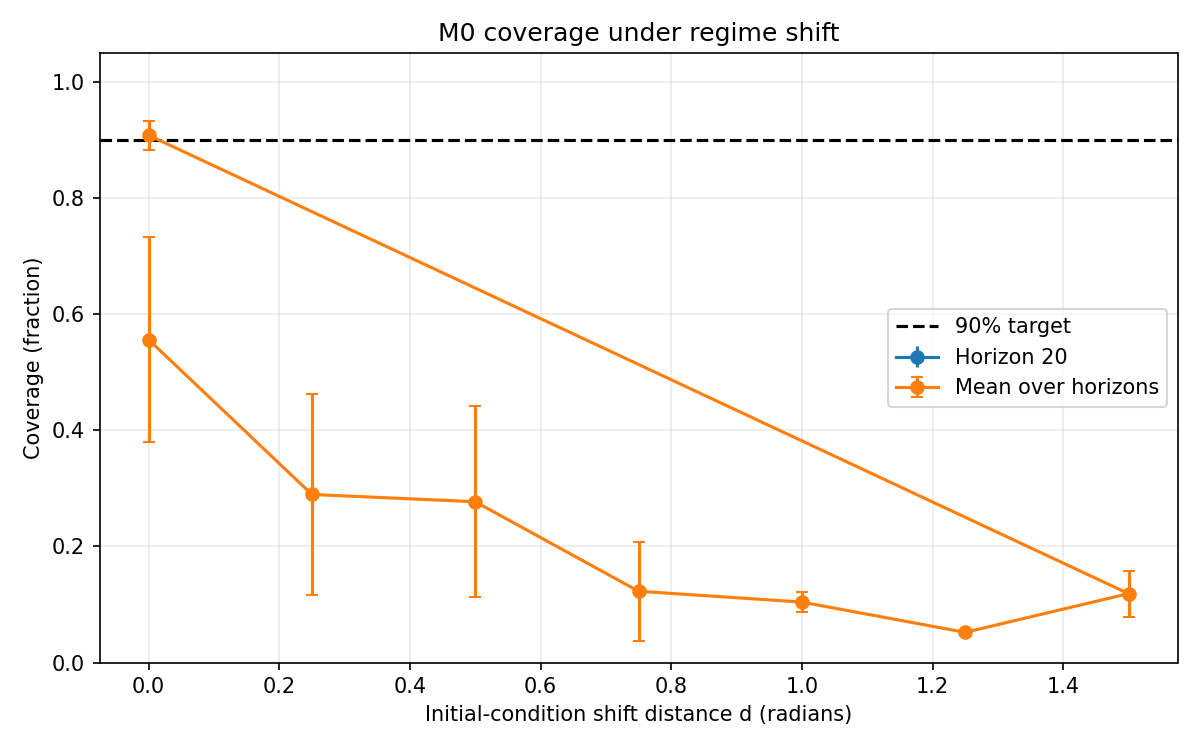
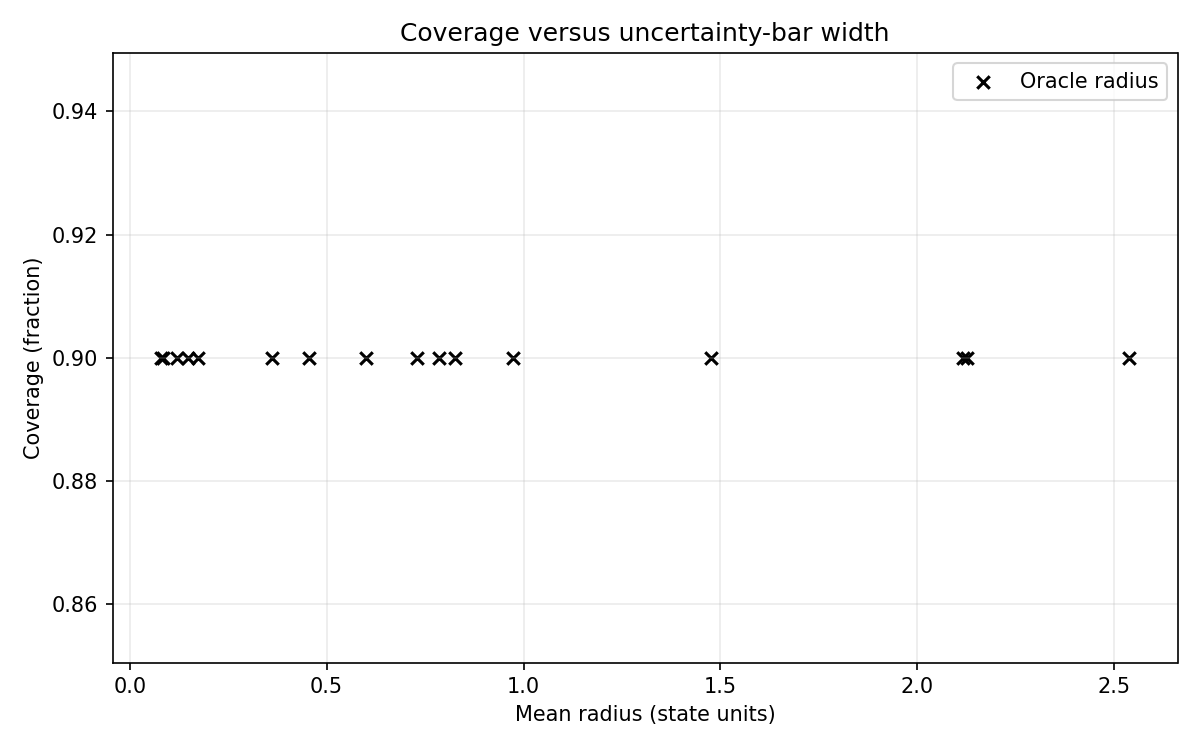
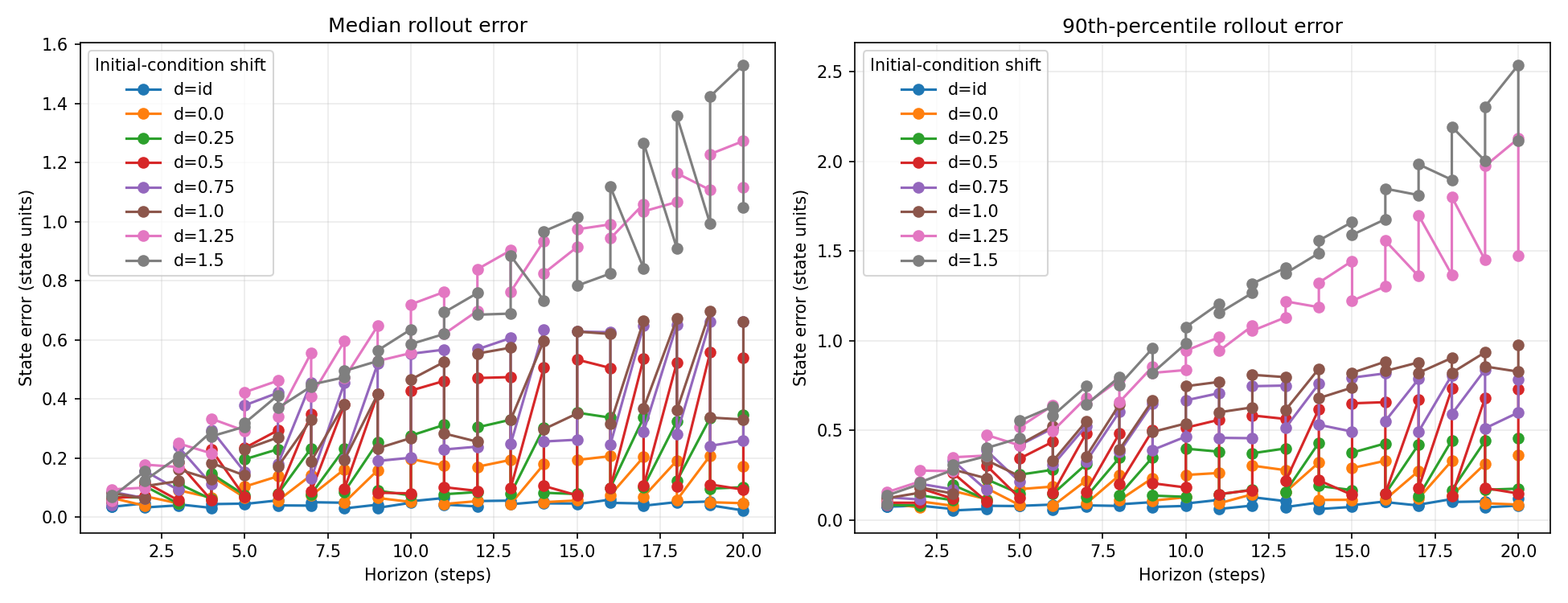
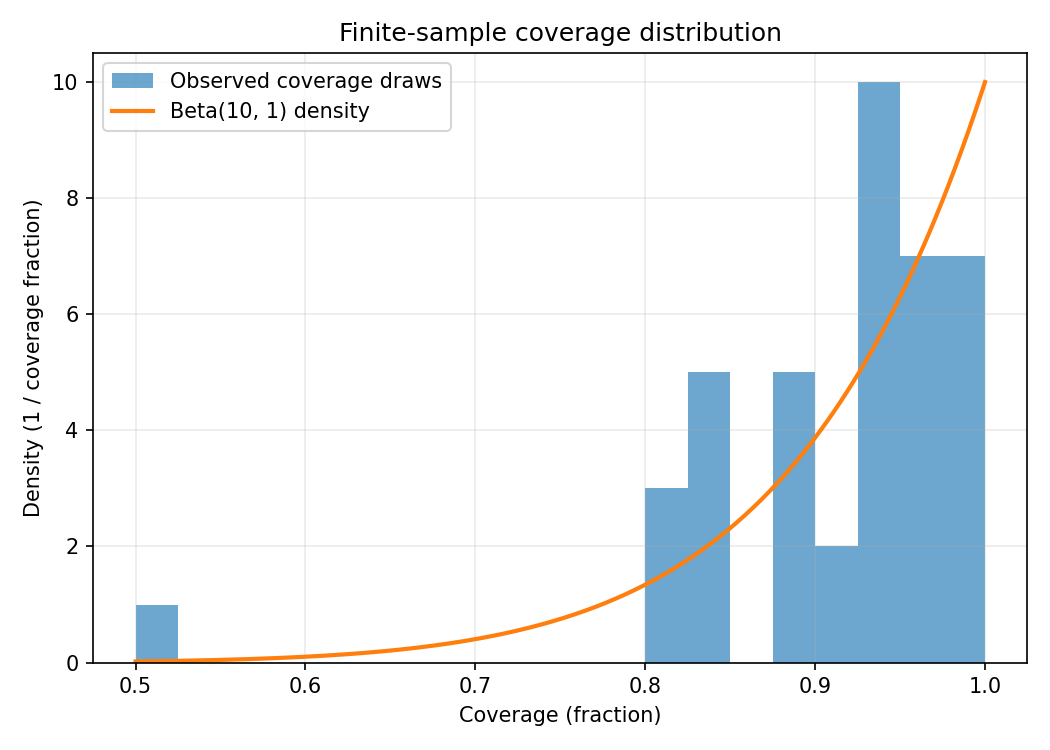
The page renders the supplied measurements so the evidence can stay ahead of the story.
No benchmark summary is loaded yet. Run the experiment to replace this note with the measured comparison table.
Interpretation stays local to this simulated pendulum study. A result here is an observation about this benchmark, not a universal guarantee.
Loading config.json…
The experiment is deliberately narrow enough to inspect, and therefore narrow in what it can support.
The page reads local CSV and image outputs. Generate them from the repository root, then refresh this page.
python scripts/run_all.pypython scripts/run_all.py --quick